

Leadership Insight from the Headstand
November 3, 2025
The Hidden Loneliness of Strong Women
May 11, 2026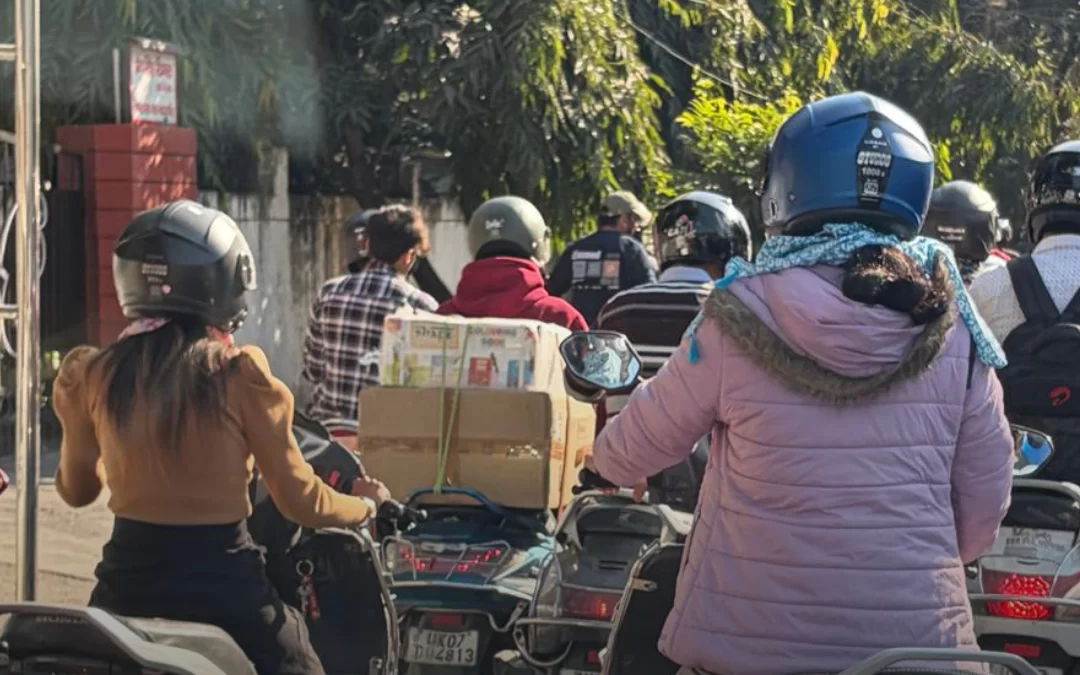
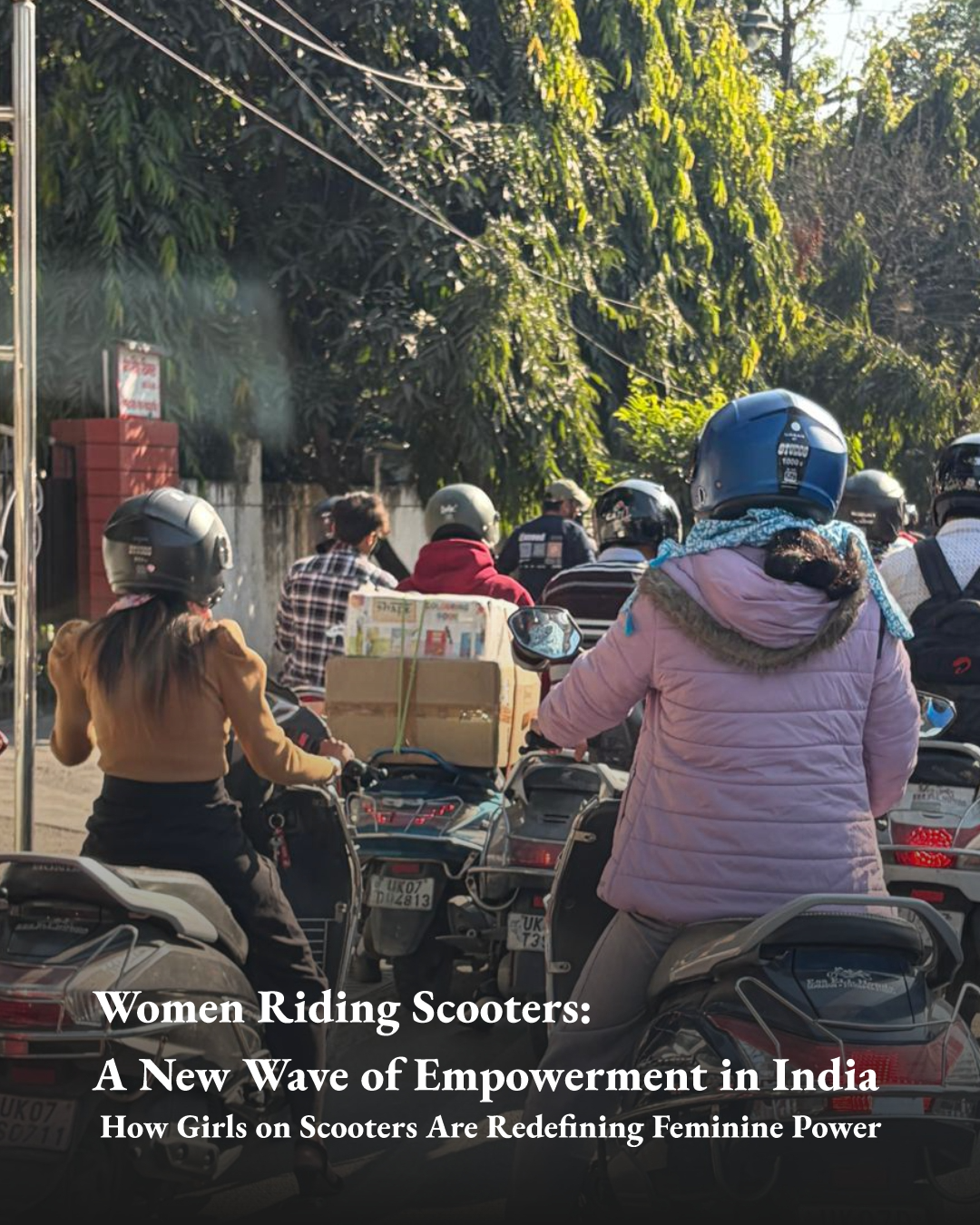
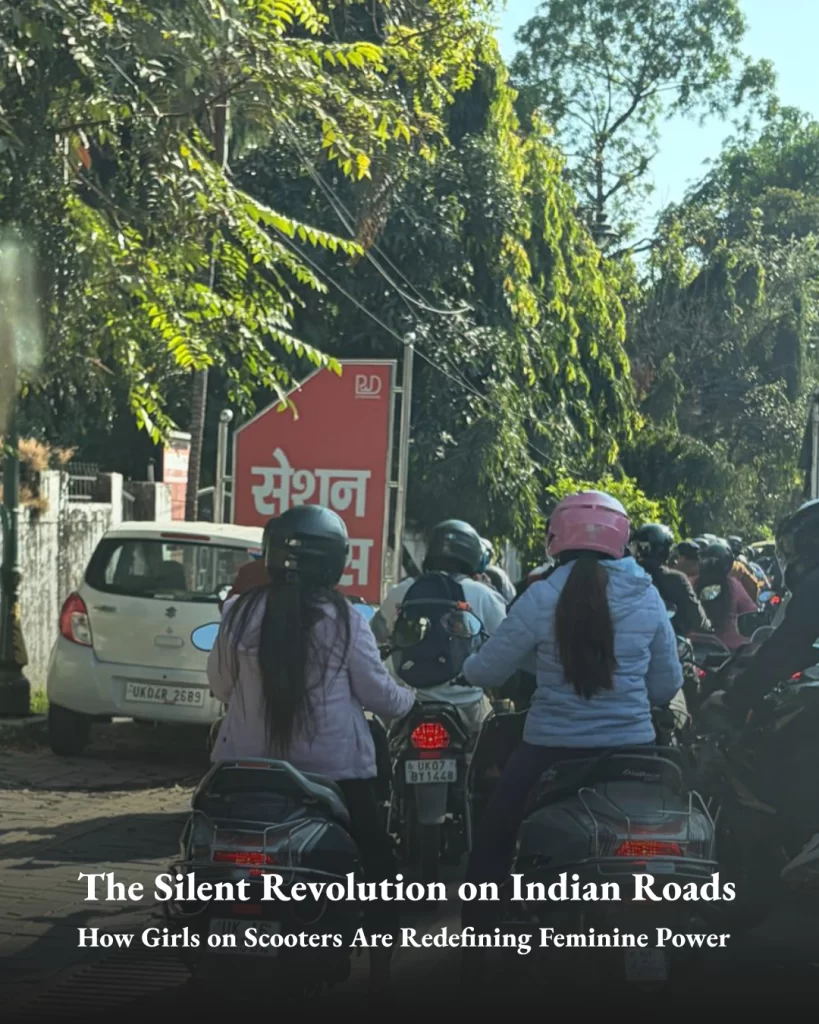 Last week at a dinner party, there was the usual complaining about the state of affairs, of our city – Dehradun. The usual nagging about lack of infrastructure, population boom and the horrendous traffic situations in the city. And my friend, said these scooters they are the main problem, they come in swarms, and they area all women. I flinched. Its been a while since I have been in my country long enough to notice what’s happening around. And then I wondered really, were they all women – and I started noticing and sure enough I saw women scooter riders everywhere – even on the highways!
And it came to me, my country is witnessing a quiet yet powerful cultural shift: girls and women riding scooters in numbers we have never seen before. While people complain about the increasing number of two-wheelers on the road, this movement represents something far deeper—an undercurrent of feminine empowerment, autonomy, and personal freedom.
Women Riding Scooters: A New Wave of Empowerment in India
Across Tier 1, Tier 2, and Tier 3 cities, more women than ever before are learning to ride scooters. This trend is more than convenience—it is an essential step toward women’s independence and self-reliance. Mobility allows women to access education, jobs, healthcare, and everyday opportunities without depending on male family members or public transportation. Scooters have become the most accessible gateway to mobility. They are affordable, lightweight, easy to handle, and offer women a sense of control over their time and choices.
Why Mobility Matters for Women’s Empowerment
In social development studies, mobility is recognized as one of the core foundations of women’s empowerment. When a woman can move freely, her world expands—both internally and externally.
Mobility gives women:
- Independence and autonomy
- Access to employment and education
- Safety and self-reliance
- Confidence and self-esteem
- The ability to navigate life on their own terms
This shift toward independent mobility is transforming not just individual lives but also the cultural landscape of India.
My story – The love of my car (Freedom and Autonomy!)
I learned the power of mobility early in life. It started with a bicycle, then I got a little moped and there started my insistence from an early to want to drive, when it was not yet common for women to be driving in India. I began driving at the age of 15 or 16 and my life change. Driving allowed me to experience a level of freedom that shaped who I would become as a woman and as a leader
My car became a symbol of independence—my ability to move without waiting for anyone, my ability to choose my direction, and the confidence to trust myself in any environment. That feeling of sovereignty has stayed with me throughout my life.
Through my life, I have had one constant, even in a country like Singapore where cars are so expensive, I always managed to have one. The feeling of freedom and autonomy it signifies for me, was enough to ensure I had one.
Today, when I see young women riding scooters across Indian roads, I see reflections of that same empowerment.
The Reality Behind “Scooter Traffic” in India
What many see as overcrowded roads or “swarms of scooters” is, in truth, a collective rise in women claiming their right to mobility. Each girl navigating the roads on her scooter is rewriting internal and societal narratives about what women can do and where they belong.
Instead of seeing chaos, we can choose to see:
- Freedom in motion
- Autonomy becoming normalized
- Women occupying public space confidently
- A new chapter in India’s social evolution
Feminine Leadership Emerging Through Everyday Actions
Empowerment does not always come from loud movements or large-scale policies. Sometimes, it rises quietly—through ordinary moments, everyday decisions, and small acts of courage.
A girl balancing on two wheels is not just learning to ride; she is learning to trust herself.
A woman weaving through traffic is practicing resilience, agency, and independence.
A young professional commuting to work is stepping into her own leadership.
This everyday empowerment is shaping the future of feminine leadership in India and this excites me, and makes my heart all warm and happy.
 The Road Ahead
This movement is not slowing down. With rising scooter ownership among women and increasing societal acceptance, we are witnessing an organic cultural transformation.
This shift is helping:
- Create safer, more independent futures for women
- Normalize women’s presence in public spaces
- Empower young girls to dream bigger
- Encourage families to trust their daughters’ capabilities
Mobility is not just transportation—it’s a catalyst for personal and societal change.
Conclusion
The next time you see countless scooters on the road, look closer. You may be witnessing one of the most powerful silent revolutions happening in India today. These young women riding through traffic are not just commuters; they are leaders in the making. They are expanding their worlds, breaking unspoken rules, and embodying a new era of feminine strength and self-determination.
This is empowerment in motion.
This is freedom in action.
This is the quiet rise of feminine power in India.
Jai Ma